Their name begins with the letter K. K for Kulintang. A funny coincidence. And so the K family is discovering the Philippines for the first time this summer. There are four of them: the parents and their two children. Villa Kulintang is still new to them, but each already seems to have found something here that feels a little like their own.
The eldest likes to make himself a nest among the many colourful cushions scattered here and there, while Dad has made the coffee maker his closest confidante. Mum has no regrets about cutting short her stay in Boracay for Sorsogon: here, she says, she has the privileged feeling of having arrived somewhere still preserved, singular, far removed from the main tourist trails. As for the youngest, barely two, somehow he has sensed for a while that something is brewing. He circles the bags lying on the terrace floor with that mysterious instinct children seem to have when an adventure is about to begin.
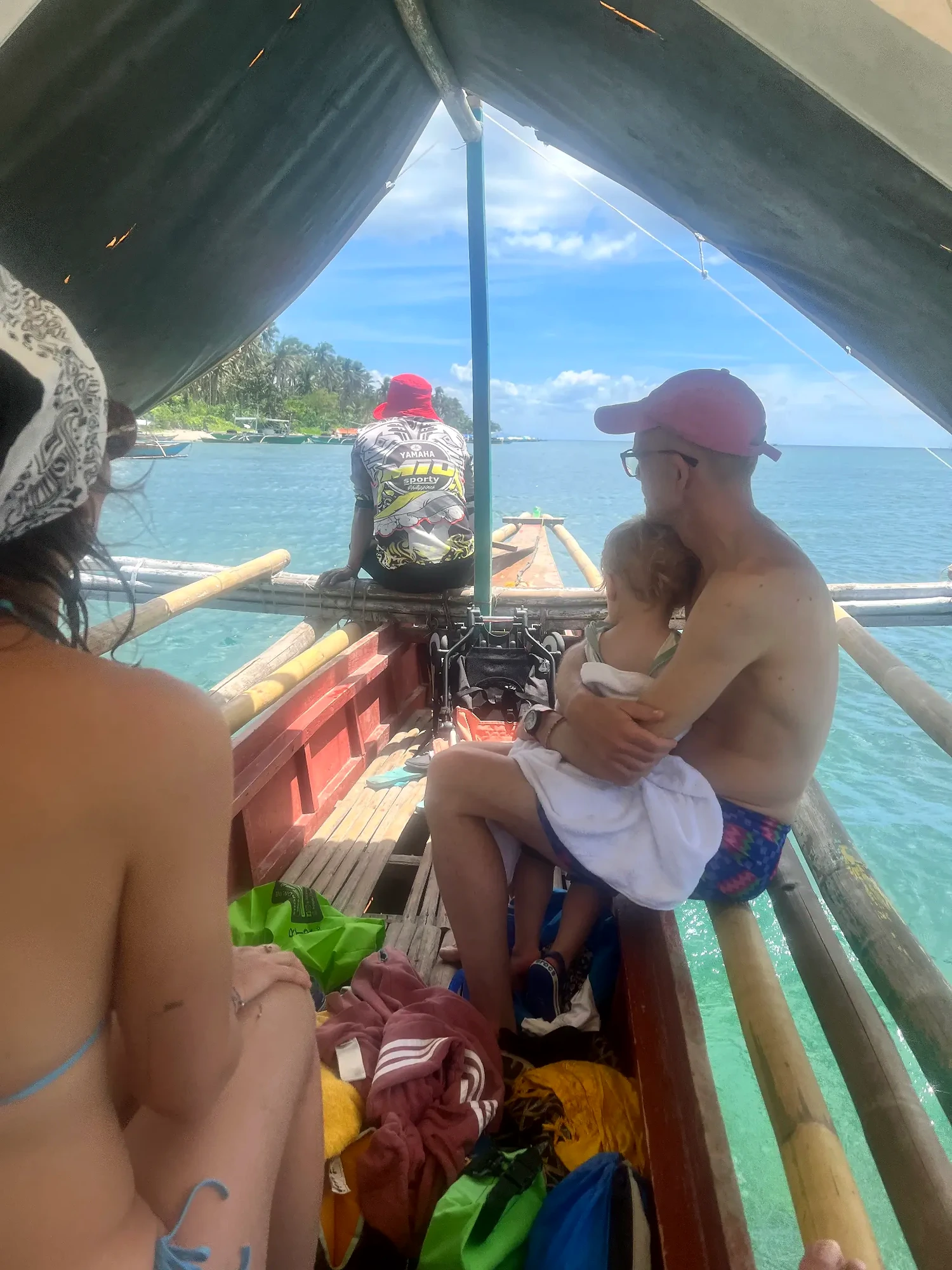
Today is island-hopping day in Pilar Bay. Captain JP has booked a bangka for half a day and, right on time, the two bangkero who will pilot it arrive in the little cove that gives access to the villa. The K family heads down towards the jetty. At high tide, the boat can come and collect its passengers right at the entrance to the property. Convenient. Swim shorts on, bags packed, masks close at hand: no further ceremony is required. Everyone climbs aboard and, very quickly, the coastline begins to slip away behind the boat.
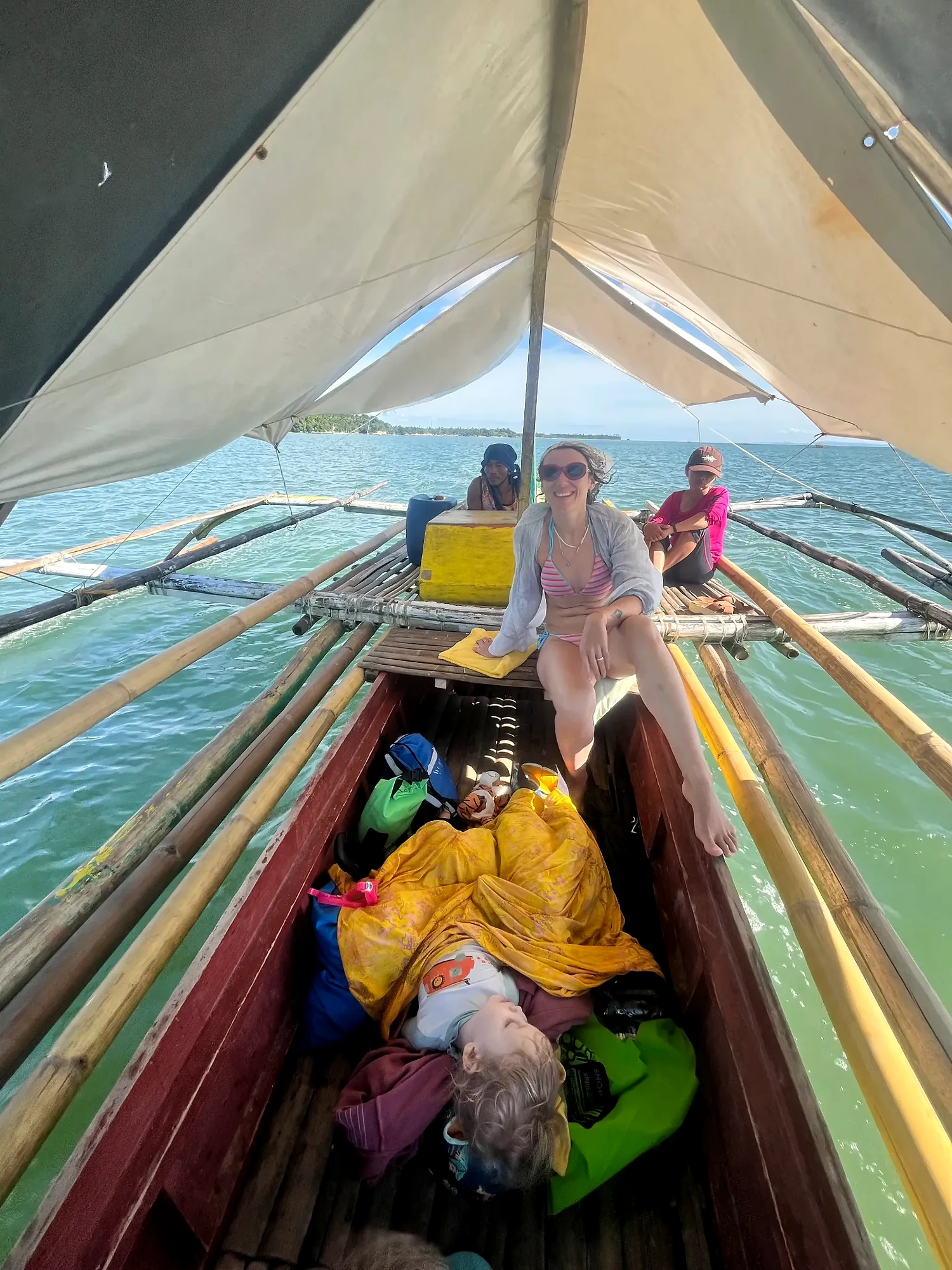
On board, everyone finds their place. People shift around to catch the breeze, move beneath the canopy when the sun grows too strong, and watch coconut palms, distant houses and stretches of coastline drift past, some of them seeming to belong to no one at all. The boat sets its own pace, slow and steady, and nobody feels the need to hurry it. The engine purrs. The bamboo outriggers slice through the water, as if obeying the laws of physics to the letter. There is time to look, time to do nothing, time to suddenly notice a beach or an island that, only minutes earlier, had been nothing more than an indistinct shape on the horizon.
The first stop is a wild beach near Tingco. No sun loungers, no music, no sign announcing that you have arrived somewhere. Just sand, a few fishing boats pulled up on shore, the sea, and that delicious feeling of landing in a place that was expecting no one. The children run across the sand and everyone starts looking for small shells. You step into the sea almost without thinking and take the first photographs of the day, the ones in which everyone is still smiling openly at the camera.
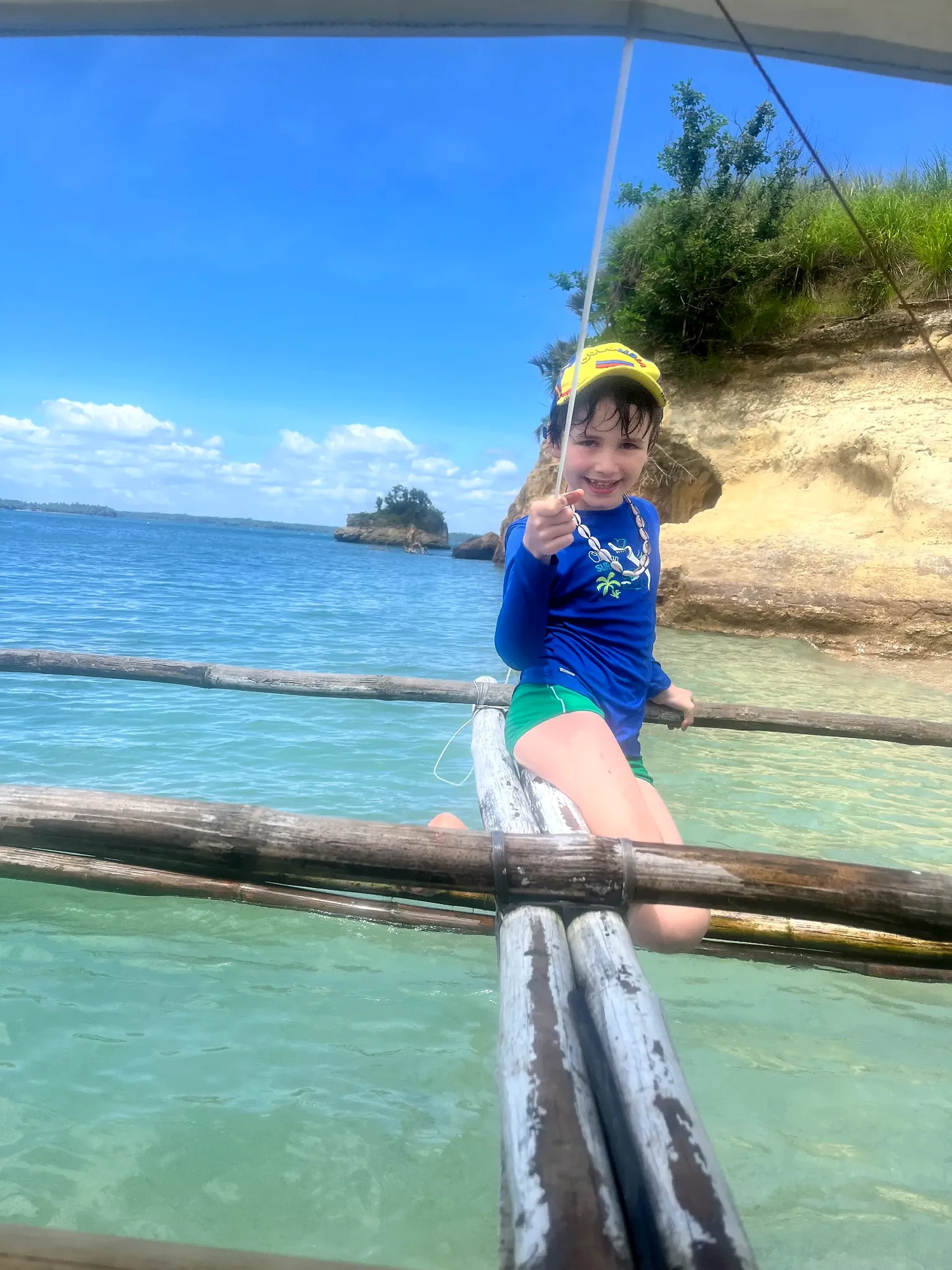
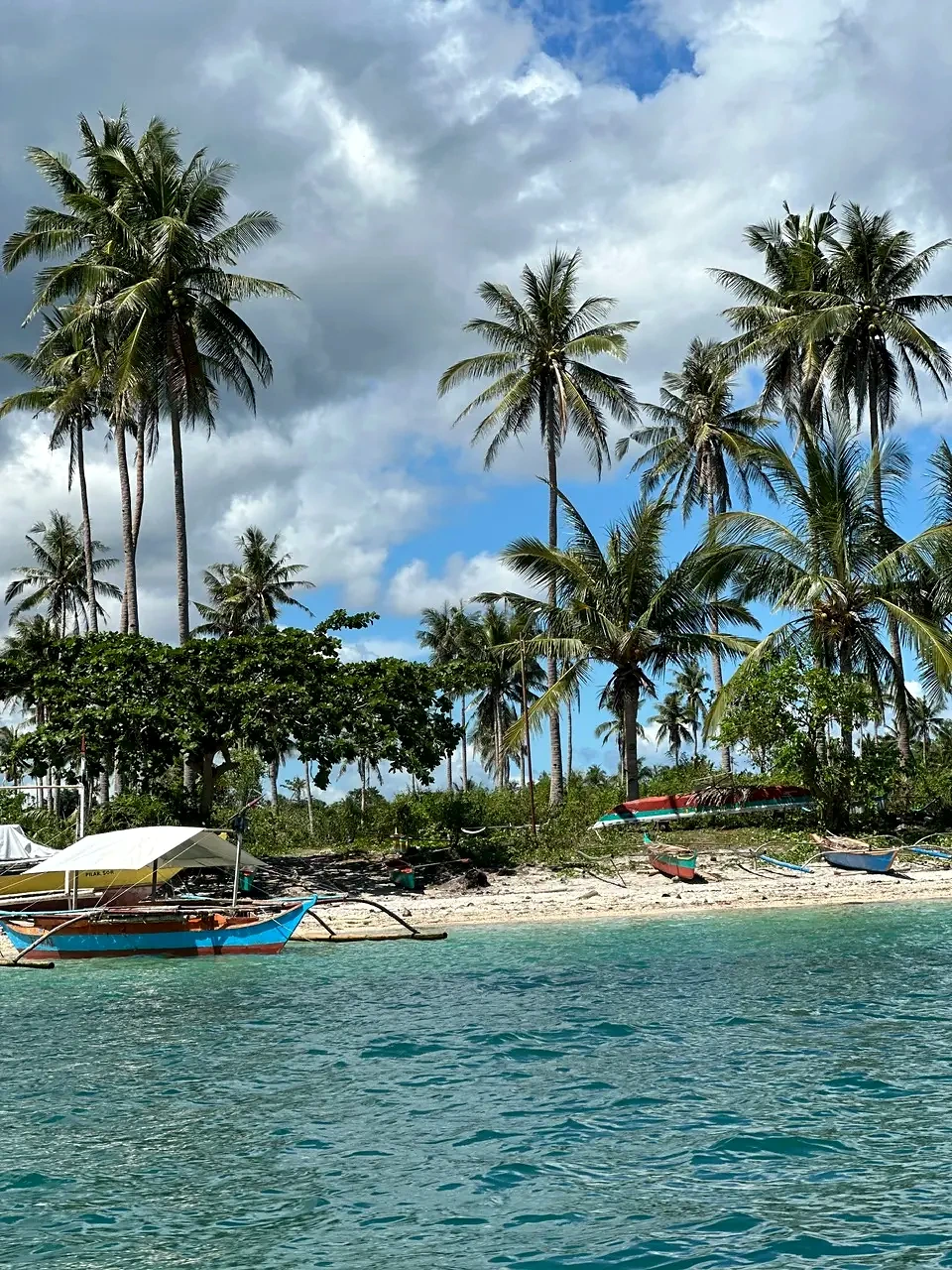
At one point, the mother walks over to Captain JP and whispers in his ear, as though sharing a secret, that this simple boat ride is worth any journey she can think of. The words stay with you. Perhaps because nothing here is trying to be spectacular. There is only space, the sea, and the feeling of having time ahead of you. A kind of freedom, without any staging. A sense of being at one with the elements, too.
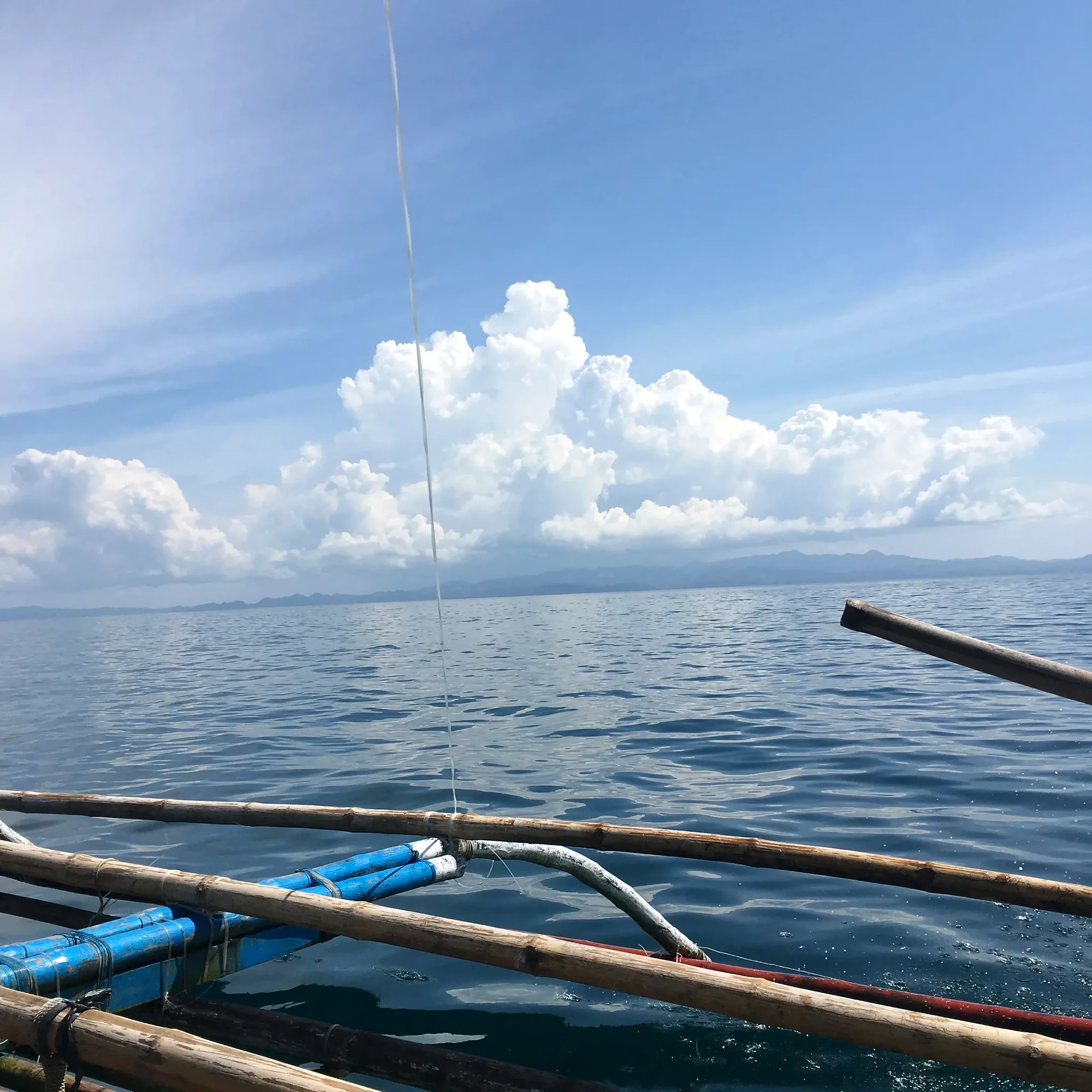
Then the anchor comes up and the boat sets off again. Beneath the canopy, towards the bow, everyone changes places while the scenery continues to unfold on either side. Nature is everywhere and does not have to try very hard to impress: a coastline entirely covered in vegetation, water changing colour as the boat moves on, and enormous clouds overhead that sometimes take on the familiar shapes of animals. People look more and talk less. Some days make you want to let your eyes do the work instead of words.
By lunchtime, it is time to find somewhere to stop. Here, that is almost enough of a plan in itself: choose a nice spot by instinct, bring the boat close to shore, unpack the picnic and settle in. Nothing very complicated. That day, luxury lies in that very simplicity.
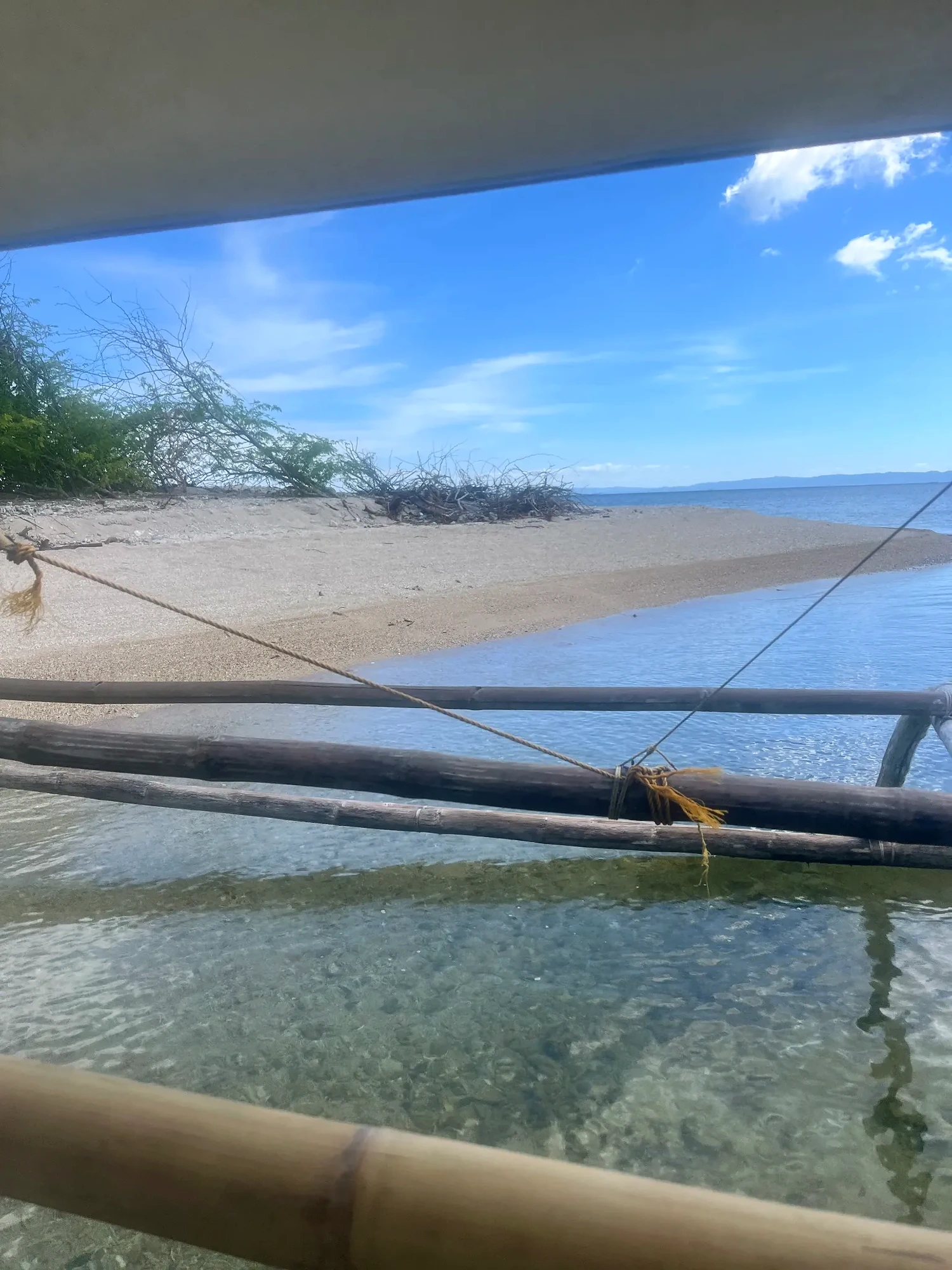
Later, near Tabunan White Beach, the boat stops beside a sandbar. Here, sea and land seem to hesitate over where the boundary between them should be, until it becomes difficult to tell where one ends and the other begins. Everyone gets out and starts walking through the water. A few metres, then farther. The water stays around the ankles, then the knees, and you find yourself walking away from the boat, on foot, in the middle of the sea. The children love it. The adults do too, although they are less likely to admit it.
When it is time to leave, one of the bangkero mentions a place he knows, a secret spot where stars shine beneath the water. Starfish. When the boat reaches the promised place, it slows, then stops. Everyone goes back into the water. People dive from the bangka. Among the corals, large starfish appear, some so big that no one on board has ever seen anything quite like them. They are examined in amazement, photographed, and for a few moments everyone poses beside them with the slightly naïve pride of Sunday explorers, before leaving them where they belong: in their sea.
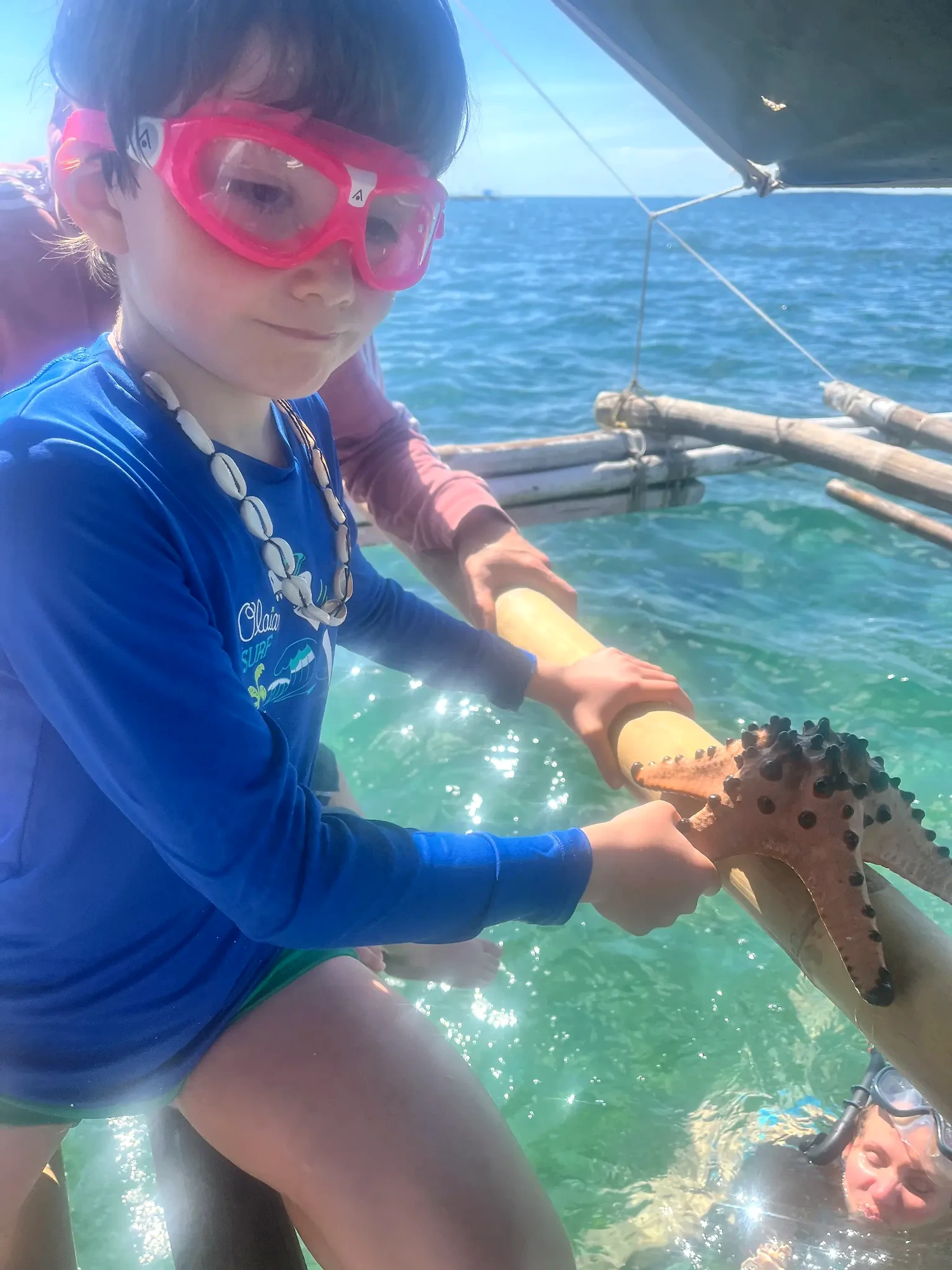
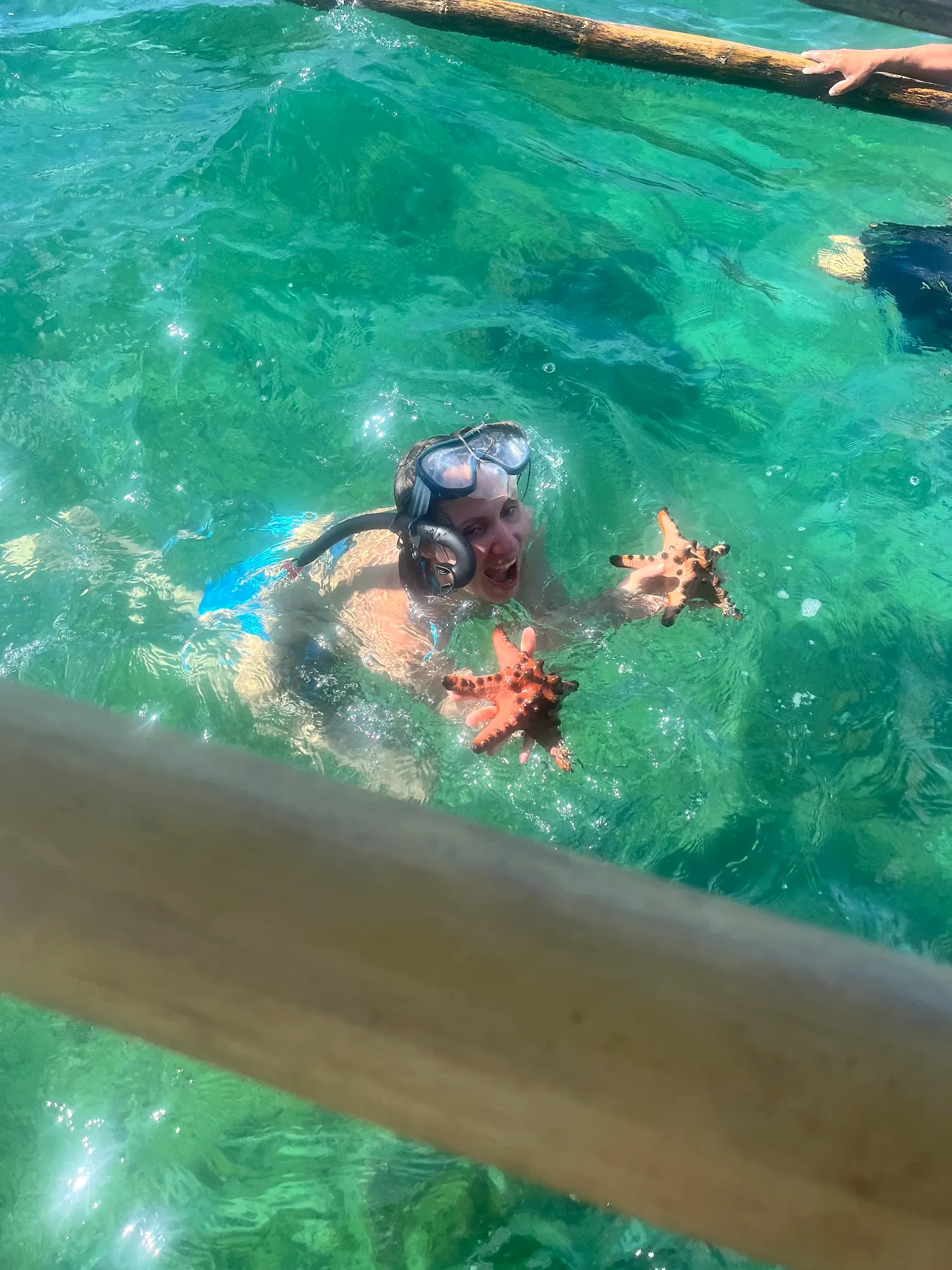
The hours pass without anyone really thinking to count them. Perhaps that is what makes a good day of island hopping: no longer being quite sure what time it is, or how long you spent on one beach or in one stretch of water. The day builds itself, without a rigid schedule, following the stops, the impulses and whatever the bay chooses to reveal.
On the way back, the day gently changes pace. After hours of sun, salt and swimming, everyone gives in to that happy tiredness that follows a long day outdoors. Bodies relax, eyes drift towards the horizon. The boat rocks gently and eventually someone falls asleep. No one actually announces that the day is over, but the journey home has already begun.
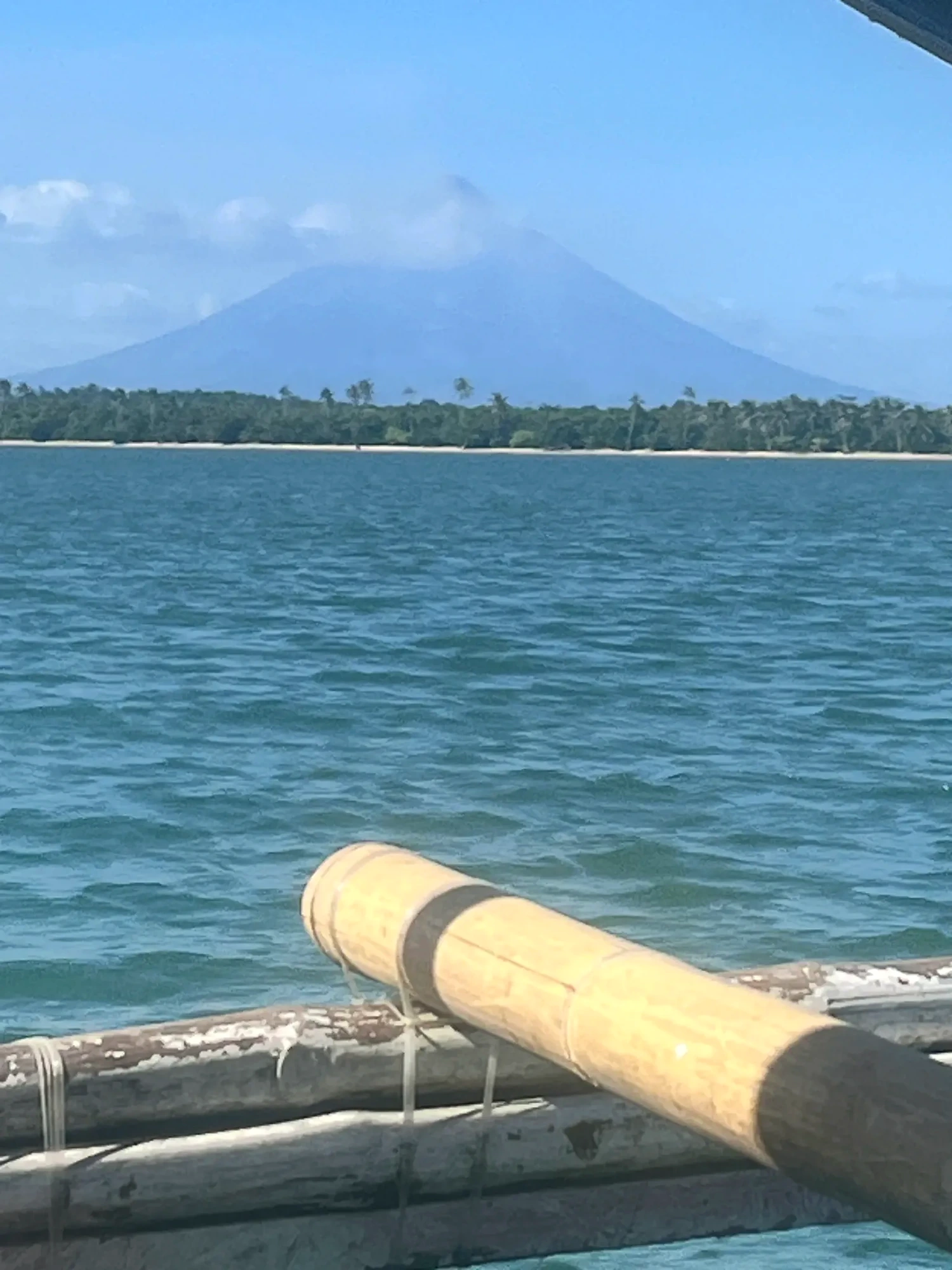
In the distance, Mayon Volcano appears. As the boat moves forward, its perfect cone seems to draw closer. It is hard to get used to something so almost unreal. The volcano could have stepped straight out of a Japanese print, even though this is unmistakably the Philippines. It remains there on the horizon, immense and calm, as though watching over the journey home.
Little by little, the familiar coastline returns. The villa’s surroundings come back into view. No grand finale, no last surprise to wait for: the day does not need one. There had been a bangka, a few fragile sandbars, a picnic, the sea, the sea, the sea and its stars, sunlight, and hours spent together.
And, when all is said and done, that is more than enough to make an adventure.
A memorable one.